We identify structural market inefficiencies, redesign the commercial
logic behind them, and validate new models under real market conditions.
Where we start
We do not start with a startup idea.
We start with an existing system that does not work as well as it
should.
We review market structures, procedures, interfaces, participants
and economics — and look for the points where value is lost, incentives
conflict, or complexity has accumulated without creating proportional benefit.
The question is not how to optimise the existing process. It is
whether the process should exist in this form at all.
Who is behind it
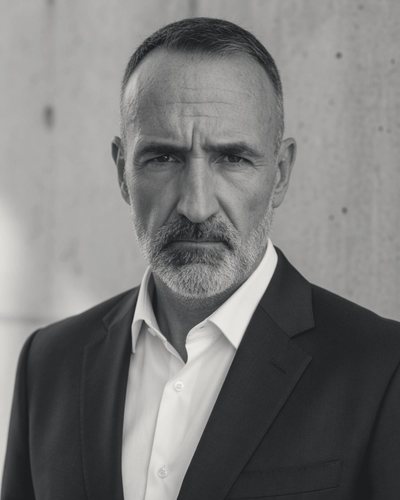
Dietmar Gruidl
Founder, Digital Generation
Former executive at GE Healthcare and GE Energy &
Infrastructure. Founder of the first fully automated lithium-ion pouch cell
production in Germany. Developed and brought a residential PV storage system to
market.
A production line built with a team of twelve. A competitor
assumed it had taken a hundred and twenty.
Digital Generation is founder-funded. Contracted-in capabilities
and AI systems carry work that once required a department.
Fewer people mean fewer interfaces, faster decisions and economics
that hold at a fraction of the usual cost base — the same principle we apply to
the systems we redesign.
How we work
From inefficiency to implementation readiness.
01
Identify
Review the current market, its processes, participants, value
flows and economics.
02
Challenge
Question structural assumptions and locate where value, time or
capital is lost.
03
Redesign
Rebuild revenue logic, operating model, incentives and resource
intensity around better system economics.
04
Validate
Test critical assumptions with real market participants,
infrastructure and operating conditions.
05
Transfer
Prepare the model for implementation and identify the structure
able to take it forward.
Better economics usually come from removing complexity, not adding
it.
Real-world validation
A model has to work outside the spreadsheet.
Commercial acceptance
Will participants adopt it, pay for it and cooperate inside the
redesigned structure?
Operational feasibility
Does the process hold against real interfaces, physical constraints
and execution requirements?
Economic resilience
Do the economics survive when key assumptions are challenged and
downside cases applied?
Only when a model holds across all three do we move toward
implementation readiness.
Selected economic impact
€0.8m
Earnings swing
From approximately €0.4m loss to €0.4m+ positive
contribution — identified within a defined €3.6m subset of an existing
commercial process, through redesign of process, incentives and value flow.
Ventures
We do not build companies for the sake of building companies.
Once a model is validated, we identify the structure best
positioned to implement and scale it — an established operator, a strategic
partner, an existing platform or a dedicated vehicle.
Fetchloop
A returns and reverse-flow ecosystem for retail. Tested against
the live operations of global logistics and marketplace operators, and evaluated
by a leading GCC retail group.